 Prosit Paul
 Chief Operating Officer
- NIHT 22 Dec, 2025
Listen to this blog

Choosing an online digital marketing certificate course in 2026 feels confusing because the market is hard to navigate. Almost every institute promises AI training, practical exposure, placement support and future-ready skills. On paper, they all look similar.
The real risk is not choosing the wrong institute but spending months learning skills through a certificate course digital marketing that doesn't translate into real job confidence.
If you're unsure whether a course will actually prepare you for interviews, real responsibilities and evolving roles, this guide is written for you. It helps you separate meaningful preparation from good marketing, without hype or shortcuts.
Table of Contents
- First, Understand What Digital Marketing Roles Expect Today
- Be Clear About Your Learning Goal
- Look for Practical AI Training, Not Just Tool Mentions
- Traditional Digital Marketing Courses vs AI-Integrated Digital Marketing Courses (Reality Check)
- Check Whether the Curriculum Is Updated Regularly
- Focus on Projects That Build Thinking, Not Just Completion
- Certificate Credibility and Placement Support Matter More Than You Think
- Why Choose NIHT Digital Marketing Institute?
- How to Make the Right Choice Without Regret
- Frequently Asked Questions
First, Understand What Digital Marketing Roles Expect Today
Before comparing courses, understand the reality of modern roles. Digital marketing today is not about executing tasks blindly. It's about thinking, analysing and adapting with AI support.
In real roles:
- SEO executives plan intent-driven content, build topical structures and use AI to speed up research while applying judgements
- Performance marketers analyse behaviour, test creatives and optimise campaigns using AI insights
- Digital marketing executives use AI for ideation and planning while maintaining brand accuracy
- Content strategists use AI for research and structuring ideas without losing originality
- Social media managers analyse engagement patterns and plan platform-specific strategies
- Email and CRM marketers use AI for segmentation and personalisation
- Marketing analysts use AI to interpret data and guide decisions, not just generate reports
If a course does not prepare you for how these roles think and work, the certificate alone will not help.
Be Clear About Your Learning Goal
Every learner approaches digital marketing with a different objective. Before comparing courses or certificates, it is important to be clear about what you want to achieve.
Ask yourself:
- Do you want to build a career in digital marketing?
- Are you looking to upgrade skills for your current role?
- Do you want to use AI tools to improve speed and efficiency?
- Are you searching for a digital marketing certificate course that matches your experience level?
This clarity matters equally for beginners exploring a digital marketing course after 12th and for professionals looking to upgrade their skills.
When your goal is clear, it becomes much easier to choose a course that aligns with your needs instead of enrolling in a generic program that does not serve your purpose.
Check the Digital Marketing Course overview
Look for Practical AI Training, Not Just Tool Mentions
Many online digital marketing courses mention AI but limit learning to tool introductions. While this may sound impressive, it rarely prepares learners for real marketing work.
A strong AI-focused digital marketing course teaches how AI fits into everyday workflows, such as:
- research and ideation
- planning and testing
- optimisation and analysis
- automation of repetitive work
The real skill is knowing where AI helps and where human judgement still matters.
This practical understanding of AI in digital marketing is what separates surface-level learning from real role readiness.
This gap between access and application is widely recognised. According to Salesforce research, 54% of marketers believe generative AI training programs are important for successfully using generative AI in their role. This highlights why structured AI learning matters more than simply having access to tools.
You can explore how AI is being applied across real marketing workflows here
Traditional Digital Marketing Courses vs AI-Integrated Digital Marketing Courses (Reality Check)
| Area | Traditional Digital Marketing course | AI-Integrated Digital Marketing course |
|---|---|---|
| Training Approach | Curriculum built around fixed modules and tools | Curriculum designed around evolving workflows supported by AI |
| Teaching Style | Tool-based instruction and step-by-step execution | Decision-based learning with AI assisting research and execution |
| Curriculum Updates | Updated periodically | Updated continuously as tools and platforms evolve |
| Practical Exposure | Limited to predefined exercises | Built around real workflows, automation and live scenarios |
| Use of AI | Introduced as an add-on or basic concept | Integrated across learning, planning and execution stages |
| Skill Development Focus | Teaching how to perform tasks | Teaching how to analyse, adapt and make decisions |
| Placement Readiness | learners require additional on-the-job training | learners adapt faster to real roles and expectations |
| Long-Term Learning Value | Skills risk becoming outdated | Skills evolve naturally with industry changes |
This difference does not just affect learning quality; it directly influences career outcomes and earning potential.
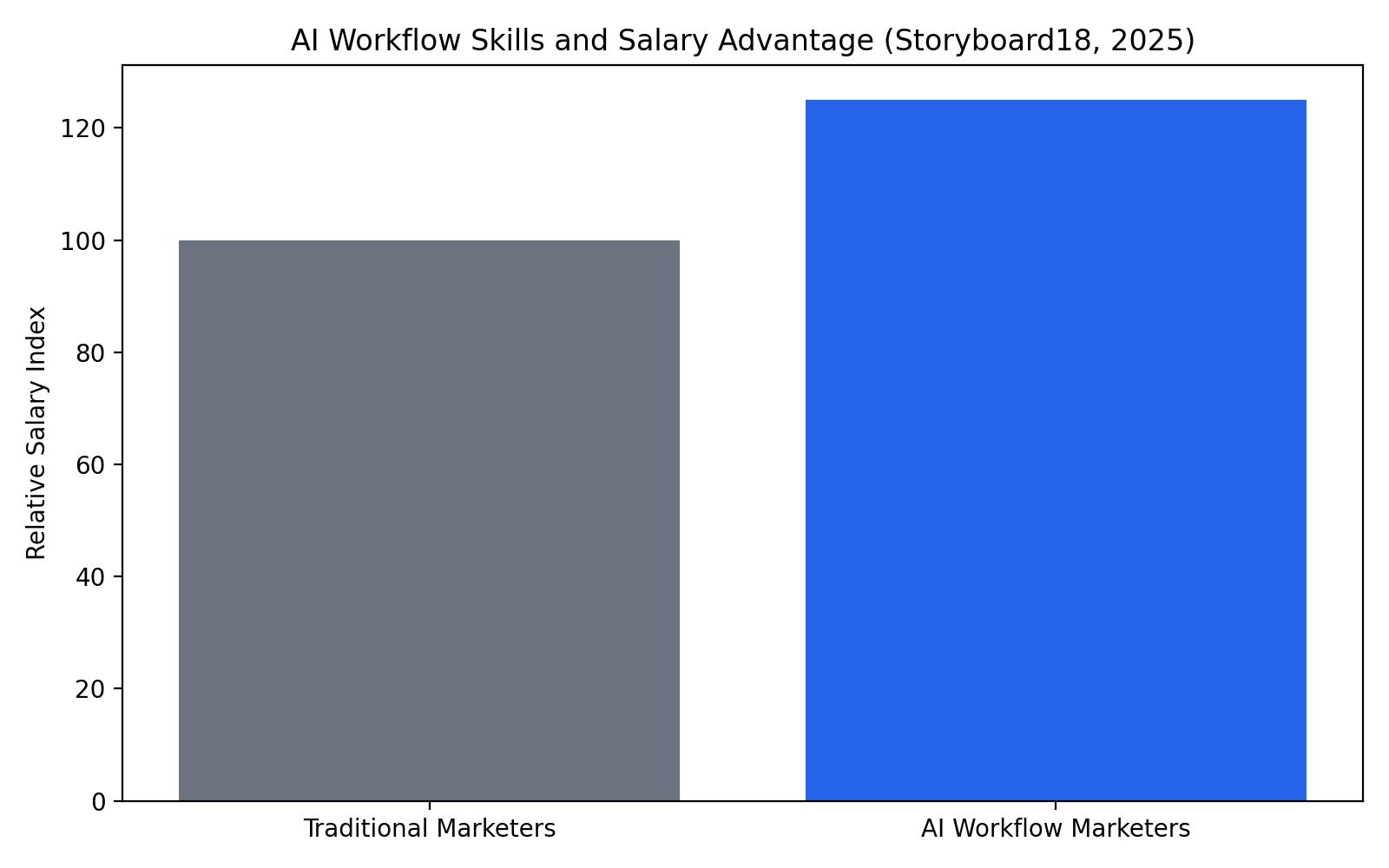
According to a 2025 hiring trends report by Storyboard18, professionals who master AI workflows aren't just getting hired faster; they are commanding 20-30% higher salaries than traditional marketers.
Check Whether the Curriculum Is Updated Regularly
A future-ready curriculum should include:
- AI-assisted strategy and planning for understanding audiences, trends and campaign direction
- Search and content optimisation using AI for research, structuring and improvement without losing human judgement
- Paid media and performance optimisation supported by data and automation for testing, targeting, and budget refinement
- Social media and engagement workflows supported by AI insights and analysis
- Automation fundamentals to streamline repetitive tasks while retaining manual control
- Social media and engagement workflows to interpret results and guide marketing decisions
If updates are rare, the learning will already be outdated when you finish.
Make Sure the Learning Structure Fits Your Schedule
A digital marketing course online course should be structured in a way that supports learning without disrupting daily responsibilities. Flexibility does not mean the absence of live learning; it means having systems in place that allow learners to stay consistent even when schedules vary.
Look for:
- Live interactive online classes to ensure real-time learning and engagement
- Class recordings for revision or missed sessions, especially for working professionals
- Regular doubt-clearing sessions to address learning gaps without delays
- Practical assignments that can be completed around work or study commitments
- 1:1 mentor interaction for personalised guidance when needed
This balance allows learners to benefit from live instruction while maintaining flexibility to learn at their own pace.
Focus on Projects That Build Thinking, Not Just Completion
Confidence comes from understanding why something works.
Strong projects focus on:
- strategy planning
- campaign structure understanding
- AI-supported content workflows
- data interpretation
- keyword and planning exercises
If a project helps you explain your decisions clearly, it's doing its job.
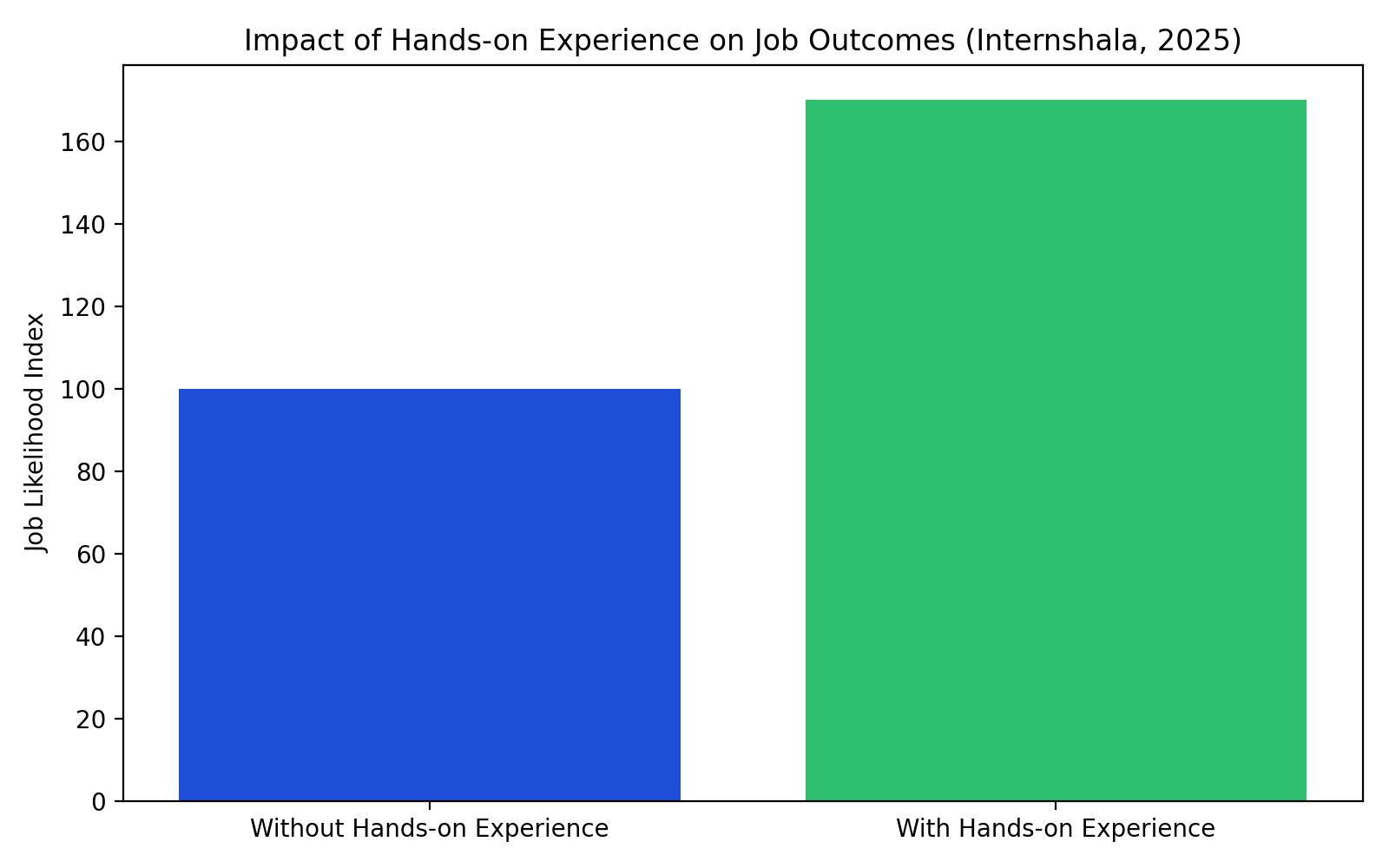
According to Internshala's 2025 report, learners with hands-on experience are 70% more likely to secure a job post-graduation. However, this hands-on experience must be embedded within a structured learning approach. When practical exposure is scattered or optional, learners often struggle to connect skills logically, which impacts confidence during interviews and real job scenarios.
Certificate Credibility and Placement Support Matter More Than You Think
A certificate is valuable only if:
- employers recognise the institute
- the institute has a consistent training track record
- learners have used the certificate in real roles
Placement support is not about guarantees. It is about resume clarity, interview preparation and understanding hiring expectations.
This is where the choice of institute starts to matter more than the list of topics covered.
Why Choose NIHT Digital Marketing Institute?
NIHT aligns with the principles outlined above for learners who want clarity, structured learning and career readiness.
The training on digital marketing focuses on AI-powered skills, practical understanding of tools and workflows and guided learning through panels and case-based exercises. Students learn how strategies are planned, evaluated and improved rather than just how tools function.
The learning experience is designed to balance structure with flexibility. NIHT offers live interactive online and offline classes to support real-time learning and engagement, along with class recordings that allow learners to revise concepts or catch up on missed sessions. This is particularly helpful for working professionals or students managing learning alongside other commitments.
To prevent learning gaps, regular doubt-clearing sessions are built into the schedule, while practical assignments are designed to fit alongside work or academic commitments. Learners also have access to 1:1 mentor interaction for personalised guidance whenever clarity or direction is needed.
Mentors support learners with interview preparation and guide them in building portfolio-ready work that reflects real understanding.
With 50,125+ students trained, a 93% placement rate and 350+ hiring partners, NIHT remains focused on outcomes with no prior degree required
You can explore learner journeys here: How NIHT's Digital Marketing Course Built Careers
How to Make the Right Choice Without Regret
Choosing an AI-focused online digital marketing certificate course does not have to feel overwhelming. When you prioritise learning depth, curriculum relevance, mentorship and real outcomes, the decision becomes clearer.
The right course goes beyond tools by helping you plan, analyse and make decisions that match real digital marketing roles in 2026 and beyond.
FAQs
Yes. An AI-focused digital marketing course is suitable for beginners when it follows a step-by-step learning approach. At NIHT, training starts with core digital marketing fundamentals such as SEO, social media, paid ads, content and analytics and then gradually moves into AI-supported research, planning, optimisation and decision-making. This helps beginners build confidence before advancing to more complex concepts.
Yes. Working professionals can manage an online digital marketing course when the learning experience matches the depth and support of offline training. At NIHT, online learners receive the same learning experience as offline classes through interactive live sessions, regular doubt-clearing sessions, 1:1 mentoring and capstone projects. If a class is missed due to work commitments, learners can revise using class recordings provided after every session, ensuring consistent learning without gaps.
Yes. Placement support matters because it helps learners move from learning to employment with clarity. NIHT provides 100% job assistance, including interview preparation, resume guidance and structured support to help learners approach recruitment processes with confidence.
Recruiters expect AI-trained digital marketers to have strong fundamentals and use AI as a support system rather than a shortcut. This includes applying AI for research, planning, analysis and optimisation while demonstrating strategic thinking and role readiness.
A digital marketing certificate is credible when it comes from an institute with industry recognition, consistent learner outcomes and long-term training experience. Reviewing student success stories, hiring associations and the institute's learning approach helps assess credibility.

.jpeg)